Skip to content

Over the past few years, I’ve had hundreds of conversations with supply chain leaders across manufacturing, retail and logistics. The frustration is remarkably consistent: “We’ve invested heavily in ERP, in analytics, in AI pilots — but we still can’t see what’s happening across our supply chain in real time.”

The reason is almost always the same. The data exists. It just doesn’t connect.

That’s the problem we built Lobster to solve. And it’s exactly why our new partnership with Snowflake matters — not just as a commercial announcement, but as a meaningful step forward for how European businesses build intelligent, connected supply chains.


The Real Problem: 80% of Supply Chain Data Lives Outside Your ERP.

Here’s a number that should give every supply chain executive pause: over 80% of supply chain data lives outside an organisation’s core systems.

Think about what that means in practice. Your ERP knows what you ordered. It doesn’t know whether your supplier’s production line is running on schedule. Your analytics platform can model demand beautifully. It can’t see the carrier delays sitting in an EDI message from three days ago. Your AI initiative promises to predict disruptions before they happen — but it can only work with data it can actually reach.

This is the core supply chain data integration challenge — and it’s structural, not just technical. It’s the gap between operational reality and the systems organisations rely on to run the business.

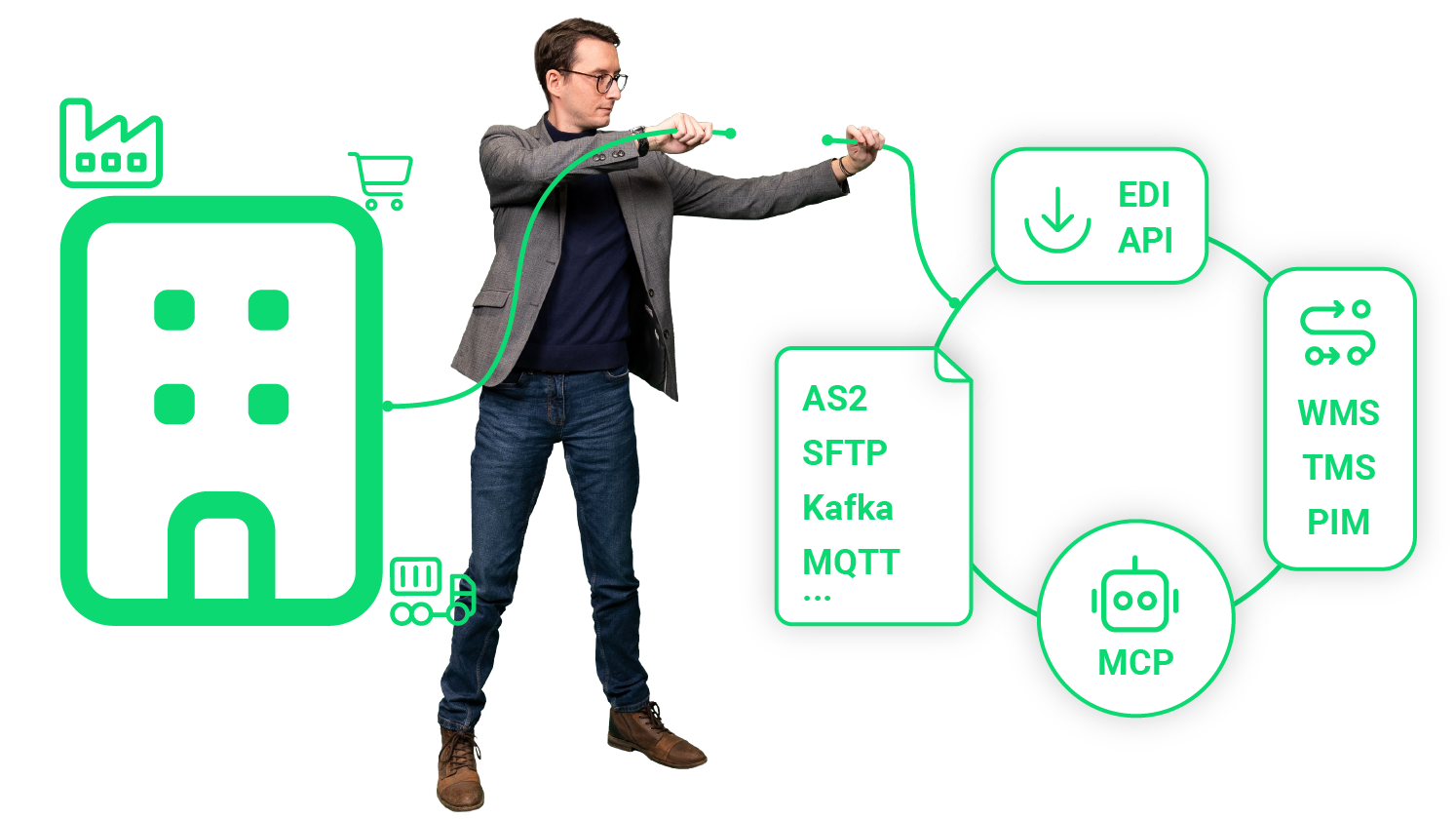
Suppliers communicate over EDI. Carriers use APIs, flat files, portals, or email. Warehouse operators run systems built a decade ago. Customs authorities, logistics service providers, trading partner networks — they all speak different languages, run on different protocols, and operate on different cycles.

Connecting all of that, reliably, at scale, across the full multi-party supply chain — that’s what we’ve spent 20+ years building at Lobster. And it’s precisely what generic integration platforms were never designed to do.


From Data Silos to a Connected Supply Chain Ecosystem.

Supply chain data silos aren’t just a technical inconvenience. They have direct operational consequences.

When data doesn’t flow reliably between trading partners, systems and decision-makers, the effects cascade: forecast errors multiply, exceptions are caught late, manual workarounds accumulate, and the confidence required to act on AI-generated insights simply isn’t there.

Most organisations reach a point where they’ve invested in ERP, WMS, TMS, analytics and visibility tools — and still can’t answer basic questions in real time. Where is my shipment? What’s my supplier’s actual delivery date? What’s my true inventory position across all channels and regions?

The answer isn’t more tools. It’s a proper supply chain data integration layer — one that reaches every edge of your ecosystem, normalises what it finds, and delivers it continuously into the systems where decisions get made.

That integration layer is Lobster. And the analytics and AI platform sitting above it is Snowflake.


Why Lobster and Snowflake: A Natural Division of Roles.

When we evaluated where to build Lobster’s strategic data partnership, Snowflake’s AI Data Cloud was the clear answer. The complementarity is architectural.

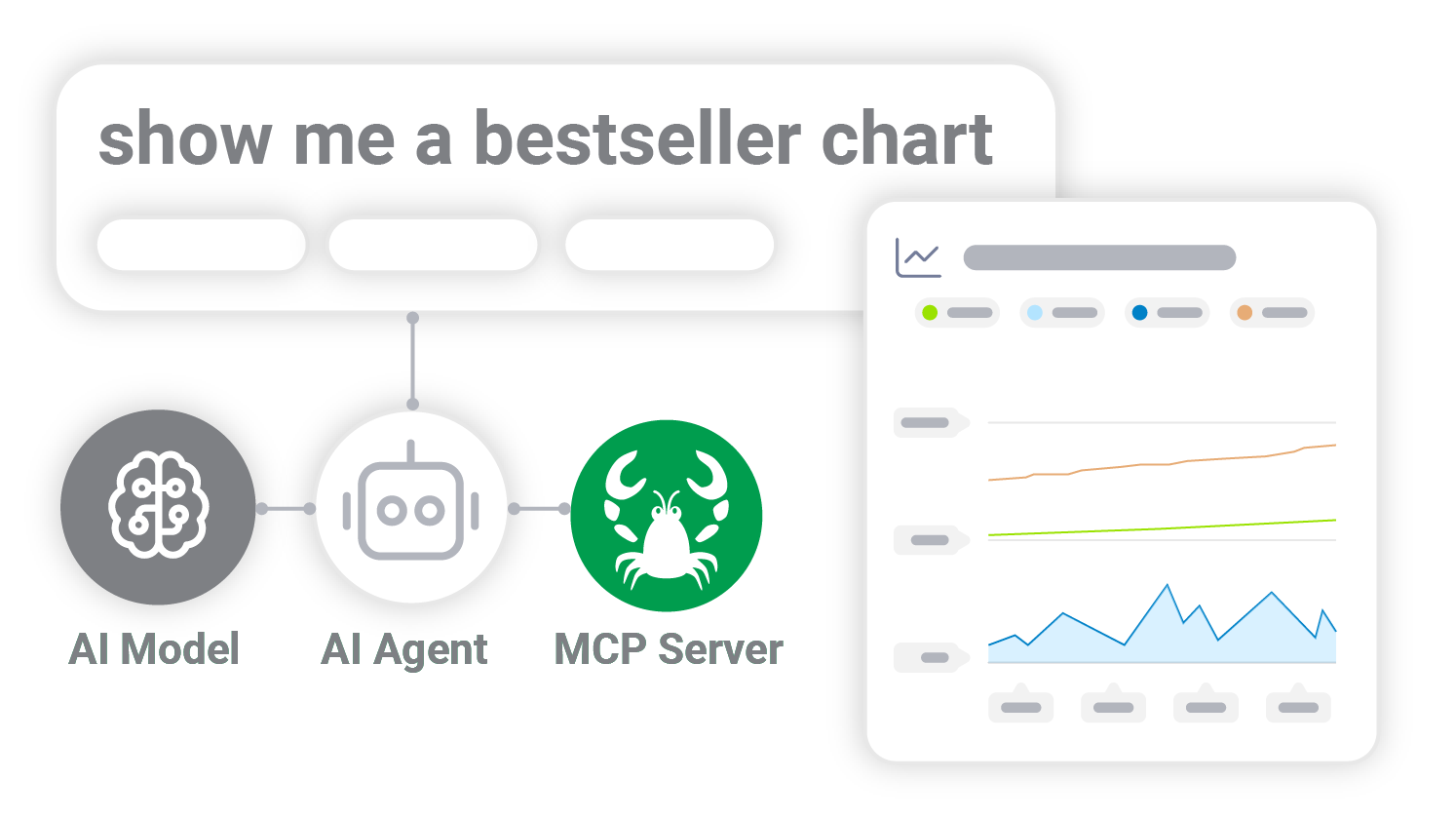
Lobster is the movement and connectivity layer. We connect the data that’s hardest to reach — from trading partners, legacy AS400 systems, IoT sensors on the shop floor, modern APIs, and EDI formats that other integration platforms don’t handle well. We normalise it, validate it, and deliver it continuously and reliably. Our EDI and API integration capabilities cover the full spectrum: from decades-old communication standards to MCP connectivity for AI agents.

Snowflake is the storage and intelligence layer. It takes that continuous flow of multi-party supply chain data and enables teams to run advanced analytics, build and deploy AI models, and act at enterprise scale — without managing infrastructure, building custom pipelines, or stitching together multiple tools.

Together, we turn supply chain data into a strategic asset. Lobster connects it. Snowflake activates it. Customers get faster insights, simpler architectures, and confidence that their data is always ready to work.

This isn’t a badge-collecting integration. It’s an ecosystem architecture designed around how supply chains actually operate: across partners, across formats, across borders.


Multi-Party Supply Chain Integration in Action: Bike24.

Bike24, one of Europe’s leading online retailers for cycling equipment and accessories, demonstrates what this architecture delivers in practice.

They use Lobster to integrate data from suppliers, carriers, SAP and their pricing systems into Snowflake’s AI Data Cloud — connecting critical processes including order management and invoicing, and enriching core ERP data with external supply chain inputs. The result is a unified, high-quality data foundation that enables financial reporting, drives operational optimisation, and feeds AI models.

With Lobster and Snowflake, we have combined supplier and carrier data and internal systems into a single, unified data layer that powers optimisation across the supply chain, enhances financial reporting, and unlocks new AI use cases.

Matthias Wendt
Bike24
Head of BI, Data & Analytics

How to Connect Supply Chain Data to Snowflake: The Architecture Explained.

For organisations evaluating how to move from fragmented data to a connected supply chain ecosystem, the architecture is straightforward in principle, even if the execution has historically been complex.

Step 1: Reach the data at the edges.

This means connecting every trading partner, carrier, supplier and logistics provider — regardless of the format or protocol they use. EDI, AS2, SFTP, APIs, flat files, IoT feeds, portal data. Lobster’s pre-built connector library and purpose-built supply chain integration capabilities handle this layer. 

Step 2: Normalise and validate before it flows.

Raw supply chain data is messy. Formats vary. Identifiers don’t match. Timing is inconsistent. A proper integration layer — not a simple data pipe — transforms and validates data before it reaches analytics. This is what makes downstream AI actually reliable.

Step 3: Deliver continuously into Snowflake.

Once normalised, data flows reliably into Snowflake’s AI Data Cloud, where it’s immediately available for analytics, reporting and AI model training — without custom pipelines or manual reconciliation.

Step 4: Act on the insights.

With a complete, continuous flow of supply chain data in Snowflake, teams can consolidate inventory across regions, integrate supplier performance with shipment tracking, run what-if scenarios on disruption events, and deploy AI agents that have the full operational picture to work with.

This is what it means to move from supply chain data silos to a genuine AI data foundation.

Why European Businesses Need This Now.

The European supply chain management market is forecast to reach $27.6 billion by 2035, driven by accelerating demand for multi-party connectivity and AI-enabled decision-making across manufacturing, retail and logistics. That macro tailwind matters — but what’s more pressing is the set of near-term requirements European organisations are already navigating.

  • E-invoicing compliance. Mandatory e-invoicing mandates are rolling out across European markets, requiring reliable, structured data exchange with trading partners at scale.
  • CSRD sustainability reporting. Supply chain emissions data — Scope 3 — must now be reported. That data lives almost entirely outside your core systems, with suppliers and logistics providers.
  • Multi-party supply chain visibility. Customers, regulators and boards increasingly expect real-time visibility across the supply chain. You can’t provide it without connecting the data.
  • AI-driven demand planning. Forecast models are only as good as the data they’re trained on. Fragmented, delayed, incomplete supply chain data produces unreliable AI — regardless of how sophisticated the model.

Each of these initiatives requires the same foundational capability: a reliable, continuous flow of supply chain data from across your entire partner ecosystem. The Lobster–Snowflake integration layer is built to provide exactly that.

What This Means for Manufacturers, Retailers and Logistics Organisations.

The practical impact of the partnership differs by sector — but the underlying architecture is consistent.

  • For manufacturers: Consolidate data from multi-ERP environments, supplier networks and production systems. Connect shop floor IoT feeds with ERP and logistics data. Build AI models that reflect the full operational picture — not just internal systems.
  • For retailers: Gain unified visibility across inventory, logistics providers and e-commerce channels. Connect carrier data, supplier performance and demand signals into a single data foundation. Respond to disruptions before they reach customers.
  • For logistics organisations: Orchestrate data flows across carriers, customs authorities and warehouse operators. Automate exception handling across complex multi-party networks. Maintain data sovereignty and compliance requirements critical to European markets.

All without replacing the systems that work. All without the brittle point-to-point connections that have historically made supply chain data integration so painful to maintain.


The Bigger Picture: From Integration to Ecosystem Architecture.

What excites me most about this partnership is what it represents strategically.

For too long, supply chain technology has been sold as a collection of point solutions — an ERP here, a WMS there, a visibility platform, an analytics tool, an integration layer — that organisations are expected to assemble into something coherent on their own. The result is fragmented architectures that create the exact supply chain data silo problem they were supposed to solve.

The Lobster–Snowflake partnership is a deliberate step toward something different: a composable, scalable supply chain data integration architecture where operational connectivity and enterprise intelligence are designed to work together from the start.

Lobster reaches the data that lives outside your four walls. Snowflake activates it at scale. Together, they give European supply chain organisations the data foundation they need to build intelligent, resilient operations — and the AI capability to act on them.

Supply chains don’t succeed in isolation. Neither does the technology that runs them.

Get Started.

Lobster and Snowflake are jointly working with customers across manufacturing, retail and logistics. If you're evaluating how to connect your multi-party supply chain data to Snowflake's AI Data Cloud – or want to understand what this architecture means for your specific situation – we'd be glad to talk.

Read the Full Press Release.

Lobster Data and Snowflake have partnered to help European manufacturers, retailers, and logistics firms unify fragmented supply chain data – from legacy EDI to modern APIs – into Snowflake's AI Data Cloud for real-time visibility and intelligent decision-making.

Explore Lobster's capabilities

Lobster's Data Platform unifies supply chain systems, partners, and processes into a single AI-ready data layer – delivering real-time visibility and automation without replacing existing infrastructure.

Explore our supply chain capabilities

Contact Our Team

If you're evaluating how to connect your multi-party supply chain data to Snowflake's AI Data Cloud —– or want to understand what this architecture means for your specific situation – we'd be glad to talk.

Get in touch

Frequently Asked Questions

Supply chain data integration is the process of connecting data from all the systems and partners involved in a supply chain — including suppliers, carriers, logistics providers, and internal enterprise systems — into a unified, usable data layer. It covers multiple formats and protocols, from EDI and flat files to modern APIs and IoT feeds.

AI and analytics models are only as reliable as the data they’re built on. Because over 80% of supply chain data lives outside an organisation’s core systems, AI initiatives without a proper integration layer are working with an incomplete picture — producing unreliable forecasts and missing the exceptions that matter most.

Multi-party supply chain integration connects not just internal systems, but the entire ecosystem of external partners — suppliers, carriers, logistics service providers, customs authorities and trading partner networks — regardless of the formats and protocols each party uses.

Lobster connects supply chain data from every edge of your ecosystem — from legacy EDI and AS400 systems to modern APIs and IoT — and delivers it continuously into Snowflake’s AI Data Cloud. This creates a complete, reliable operational data foundation for analytics, reporting and AI.

Key use cases include: real-time multi-party supply chain visibility, AI-driven demand planning, supplier performance analytics, e-invoicing compliance, CSRD sustainability reporting, and automated exception management across complex trading partner networks.