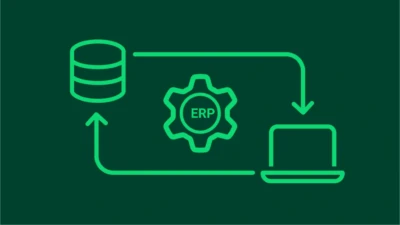
The Wall Every ERP Migration Hits.
Here is the scenario that plays out again and again. A manufacturer is deep into a migration – say, SAP R/3 to S/4HANA. Hundreds of suppliers are wired directly into the ERP. The internal project plan looks clean: data mapped, modules configured, cutover weekend scheduled.
Then one question surfaces, usually too late: do all of those partners need to know?
The answer is no – but only if the migration was designed with a layer of insulation between the ERP and the outside world. Most are not. And that single omission is the most expensive mistake we see project teams make.
Without that layer, the migration leaks straight through to every partner on the network. Change the ERP, and every supplier and customer connection has to be retested. Order formats, invoice structures, shipping notices – all of it. You end up contacting hundreds of partners and asking them to change how they exchange data with you, because you decided to upgrade.
That is not a migration. That is a supply chain disruption you created yourself.
Why ERP Migration Costs Spiral Out of Control.
ERP migrations typically run 18 to 36 months, and somewhere between 55 and 75 percent finish over budget and behind schedule. The root cause is rarely the ERP software. It is the external web of trading partners who suddenly have to re-integrate with you – on your timeline – while still running their own operations.
Smaller organisations have dozens of these connections. Larger ones have thousands. The ERP cutover commands all the internal attention and budget. The partner impact receives almost none – until it becomes the factor that pushes the timeline by months.
The Fix – Decouple Integration from the ERP.
The solution is to stop treating integration as something that lives inside the ERP. Instead, you place a translation layer between your ERP and your trading partners, and let it absorb the change.
This is precisely where Lobster sits: between your ERP and the outside world, handling EDI, APIs, legacy formats, and modern cloud applications in one place, with no code required. When the ERP underneath changes, the layer keeps translating. Your partners see no difference.
Our CEO Tim Srock uses the analogy of DeepL for the supply chain. Your partners speak French. Internally, you switch from English to German. The layer in the middle keeps translating – and nobody on the outside has to learn a new language.
What This Looks Like in Practice
- Internally, you move from R/3 to S/4HANA on your own schedule
- Externally, the supplier inbox does not change
- The integration layer maps the new data structures underneath, transparently
- Your trading partners have no idea anything happened
It does not have to be a big-bang cutover. You phase it – one batch of partners at a time, both systems running in parallel, with minimal disruption on either side.
One large Austrian logistics and transport company has operated on this model since 2008, processing six million jobs per month without writing a single line of code. Their partners have never had to care about what changed behind the scenes.
The Timing Mistake That Multiplies ERP Migration Risk.
There is a strong instinct to sequence this in reverse – finish the ERP migration first, then address the integration layer afterward. It feels orderly. It is also where the cost hides.
If you deploy the integration layer before the ERP switch, you de-risk the entire migration. The layer is already absorbing change, your partner connections are already insulated, and the cutover becomes an internal event rather than a network-wide one.
Wait until after, and you have already spent the project calling partners and retesting connections you could have protected from the start.
The teams getting this right are evaluating their integration approach 6 to 12 months before the ERP decision closes – not after. That window is also where you have the most leverage, the most options, and the least external pressure.
The Question to Ask Before Your ERP Plan Is Locked.
The ERP upgrade will always command internal attention. The partner impact almost never gets budgeted for. That gap is precisely where timelines slip and supplier relationships get strained.
So before the plan is finalised: what does your current ERP migration plan assume about trading partner impact?
If the honest answer is “we’ll deal with that at cutover,” it is worth a conversation now – while there is still time to make the migration something only your internal team notices.